
Do I Need a Podiatrist or Can I Sort This Myself?

It's a question I get asked more than almost any other. And it deserves a straight answer — not a hedge, not a vague recommendation to "seek professional advice".
Some foot problems you can absolutely manage at home. Others you can't, and trying to will make them worse. The difference usually comes down to three things: how long it's been going on, whether there's any sign of infection, and whether your general health puts you in a higher-risk category.
Here's a condition-by-condition guide.
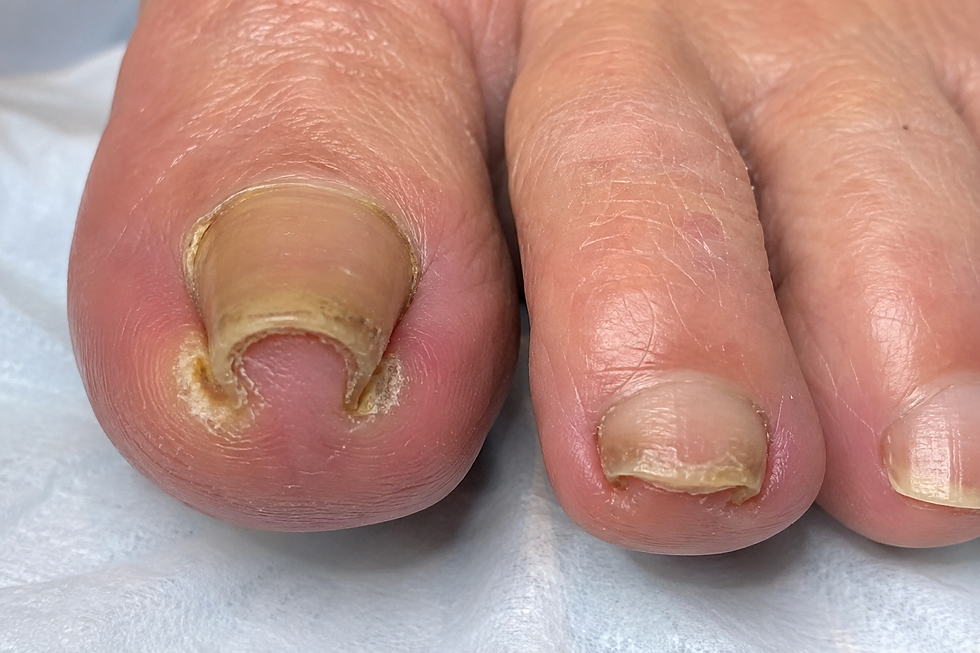
Ingrowing toenails
Manage at home if:
The nail is slightly tender but there's no redness, swelling, or discharge
You can trim it straight across without aggravating it
You're otherwise healthy with no diabetes or circulation concerns
Trim straight, wear wider footwear, keep it clean, and monitor it. If it doesn't settle within two weeks, move on.
See a podiatrist if:
There is redness, swelling, warmth, or any sign of pus — this means infection
The pain is affecting how you walk
It keeps coming back after you've tried to sort it yourself
You have diabetes, poor circulation, or are on blood thinners — do not attempt home treatment
You've been cutting down the sides of the nail — this nearly always makes it worse
Most people who come to me with ingrowing toenails have been managing at home for longer than they should. A mildly ingrowing nail is straightforward to treat. A chronic or infected one is more involved. Earlier is always easier.
Heel pain
Manage at home if:
It came on after a sudden increase in activity and has been present for less than two to three weeks
It improves with rest and stretching is making a noticeable difference
Reduce load, stretch consistently, check your footwear, and give it a few weeks. Early plantar fasciitis often responds well to this.
See a podiatrist if:
The pain has been present for more than six to eight weeks without meaningful improvement
It's getting worse despite rest
You've tried stretches, insoles, and new footwear and nothing has changed
It's affecting your training, work, or daily routine
Heel pain that doesn't shift usually has a reason it isn't shifting — and that reason is worth finding. A biomechanical assessment tells you what's driving the problem, not just what to do about the symptoms.
Verrucas
Manage at home if:
It's small, painless, and has been present for less than three to four months
You're applying over-the-counter salicylic acid consistently
Many verrucas in children resolve on their own as the immune system matures. Consistency with treatment matters more than which product you use.
See a podiatrist if:
It's been present for more than six months with no sign of change
It's painful on walking
You have multiple verrucas or a spreading cluster
Over-the-counter treatment has been tried consistently and hasn't worked
Stubborn verrucas are one of the most common things people put up with unnecessarily. Falknor's needling produces resolution in the majority of cases that haven't responded to surface treatments — it works on a completely different principle.

Fungal nails
Manage at home if:
The discolouration is mild and limited to one nail
You're prepared to apply antifungal lacquer consistently for several months
Over-the-counter amorolfine lacquer can work for mild, superficial cases — but it requires commitment and results are modest for established infection.
See a podiatrist if:
Multiple nails are affected or the nail is significantly thickened or separating
You've tried treatment for three to six months without improvement
You have diabetes or circulation problems
You're not sure whether it's fungal infection or something else
Not every discoloured nail is fungal — trauma and psoriasis can look very similar. A podiatrist can assess properly and, where needed, take a nail sample to confirm the diagnosis before you spend months treating the wrong thing.
The one rule that applies to everything
If it's been going on for more than six to eight weeks and isn't improving, stop managing it yourself and get it properly assessed.
Foot problems that don't resolve with sensible self-care almost always have a reason — and that reason is usually very treatable once it's identified. The longer it goes on, the more entrenched it tends to become.
When to seek urgent help
A few situations where you should not wait:
Any sign of spreading infection — increasing redness, heat, pus, red streaks, or fever
Any foot problem if you have diabetes, peripheral vascular disease, or compromised immunity
A wound on the foot that isn't healing
Not sure? Book an assessment.
If you're still not sure which category you fall into — that's a reasonable answer too. Book an appointment and I'll give you a straight assessment of what's going on and what actually needs to happen next. Sometimes the answer genuinely is: you're fine, here's what to do at home. I'd rather tell you that than have you come back six months later with something that's become much harder to fix.
📍 Yorkshire Foot Clinic, Horsforth, Leeds
📅 Open Tuesdays and Thursdays


Comments