

Verruca / Warts Treatment in Horsforth, Leeds
A verruca is a viral infection caused by the HPV virus. It is quite common in both children and adults. Anyone can develop a verruca or wart as they are contagious and can be picked up in places like sports centers and swimming pools. Treatment options and include topical treatments, microwave therapy, needling, or freezing the verruca.
What is a verruca?
Plantar warts are caused by specific strains of Human Papillomavirus (HPV) and usually appear on the soles of the feet as small, rough bumps. While some warts may eventually disappear on their own, others can be as stubborn as Veruca's demands, remaining and becoming increasingly uncomfortable. Recognizing their causes and determining when removal is necessary can aid in regaining comfort and preventing these unwanted visitors from sticking around.
Causes of a Verrucas and Warts
Plantar warts are caused by specific strains of the human papillomavirus (HPV). The virus enters the skin through tiny cuts or abrasions, which often go unnoticed. Once inside, it infects cells in the outer layer of the skin, leading to increased cell production and the formation of a wart.
The risk of exposure is higher in environments where the virus can survive more easily. These include warm, moist areas such as communal showers, swimming pools, and gym floors, particularly where people walk barefoot.
In these shared spaces, the skin is more vulnerable, and small breaks in the skin can allow the virus to enter. Even minor damage to the skin, including that caused by dryness or irritation, can increase susceptibility.
For this reason, protecting the skin and avoiding barefoot contact in communal areas is recommended.
Symptoms
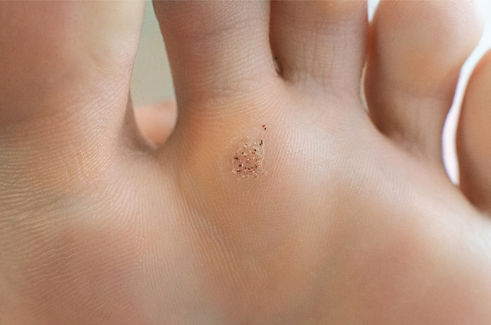
Plantar warts typically manifest as small, rough patches on the soles of the feet, often found the base of the toes, on the ball, or the heel.
On darker skin, these growths appear lighter than the surrounding skin, making them more noticeable. Since plantar warts develop on weight-bearing areas of the, they tend to be pressed inward, resulting in a hard callus forming over them, which can increase discomfort while standing or walking.
A characteristic feature of plantar warts is the presence tiny black dots on the surface, known as “wart seeds,” which are clotted blood vessels.
Sometimes, plantar warts can cluster together, creating mosaic warts that cover a larger area of the sole.
In these instances, the combined growths can heighten the pressure on the affected area, leading to greater discomfort during daily activities.
Treatments
To provide more targeted care, podiatrists offer various methods specifically aimed at treating plantar warts. These methods include:
- Cryotherapy: This technique employs extreme cold, using liquid nitrogen, to “freeze” the wart, gradually eliminating the wart tissue.
- Wart Needling: This procedure involves repeatedly pricking the wart with a needle to stimulate the body’s immune system, prompting it to attack the virus.
- Topical Application: Specialised medications or chemicals, such asicylic acid, can be applied to the affected area to dissolve or “burn” the wart tissue.
- Curettage: This minor surgical procedure involves carefully scraping or cutting out the wart, effectively removing the growth the skin.
- Laser Technology: Laser energy targets the blood vessels supplying the wart, cutting off its blood flow and causing the tissue to die and fall away.
Which treatment plan is right for you?
Treatment for verrucas will depend on their size, depth, and how long they have been present. In milder cases, topical treatments may be suitable to gradually reduce the affected skin. More established verrucas may respond better to cryotherapy, while persistent or resistant cases can often require more advanced treatment such as verruca needling to stimulate an effective immune response.
As verrucas can vary significantly, it is not always possible to determine the most effective treatment without a proper assessment. What works well for one person may not be suitable for another.
A consultation allows the verruca to be fully assessed and the most appropriate treatment plan to be recommended, helping to achieve the best possible outcome as early as possible.
→ Book an appointment to get started with the right treatment